Protein after 40: how much helps preserve muscle during weight loss?

A practical, evidence-aware guide to protein after 40, what it may help, its limits and when individual medical advice matters.
Book a consultation
People searching for protein after 40 usually want a clear action plan, not another promise. Protein supplies amino acids, but muscle preservation also depends on resistance training, energy intake, illness and total food quality. The useful question is how this information changes a safe, repeatable routine for one person.
Health, fitness and skin outcomes are shaped by age, sleep, medicines, medical conditions, food pattern, stress and starting ability. A number, supplement or machine is only one part of that picture. The aim is to choose an approach that can be followed and reviewed, rather than chase a dramatic short-term result.
Key takeaway: Start with the goal, check the risks and measure progress with more than one useful marker.
What this topic really means
Protein supplies amino acids, but muscle preservation also depends on resistance training, energy intake, illness and total food quality. It should be interpreted alongside symptoms, examination and relevant medical history. Two people with the same headline concern may need different starting points because their baseline health and priorities are not the same.
Online claims often jump from a biological mechanism to a promised outcome. A mechanism can explain why researchers test an idea, but it does not prove that a product, programme or procedure improves how long or how well people live. Human trials, follow-up time, side effects and the size of any benefit all matter.
A practical way to begin
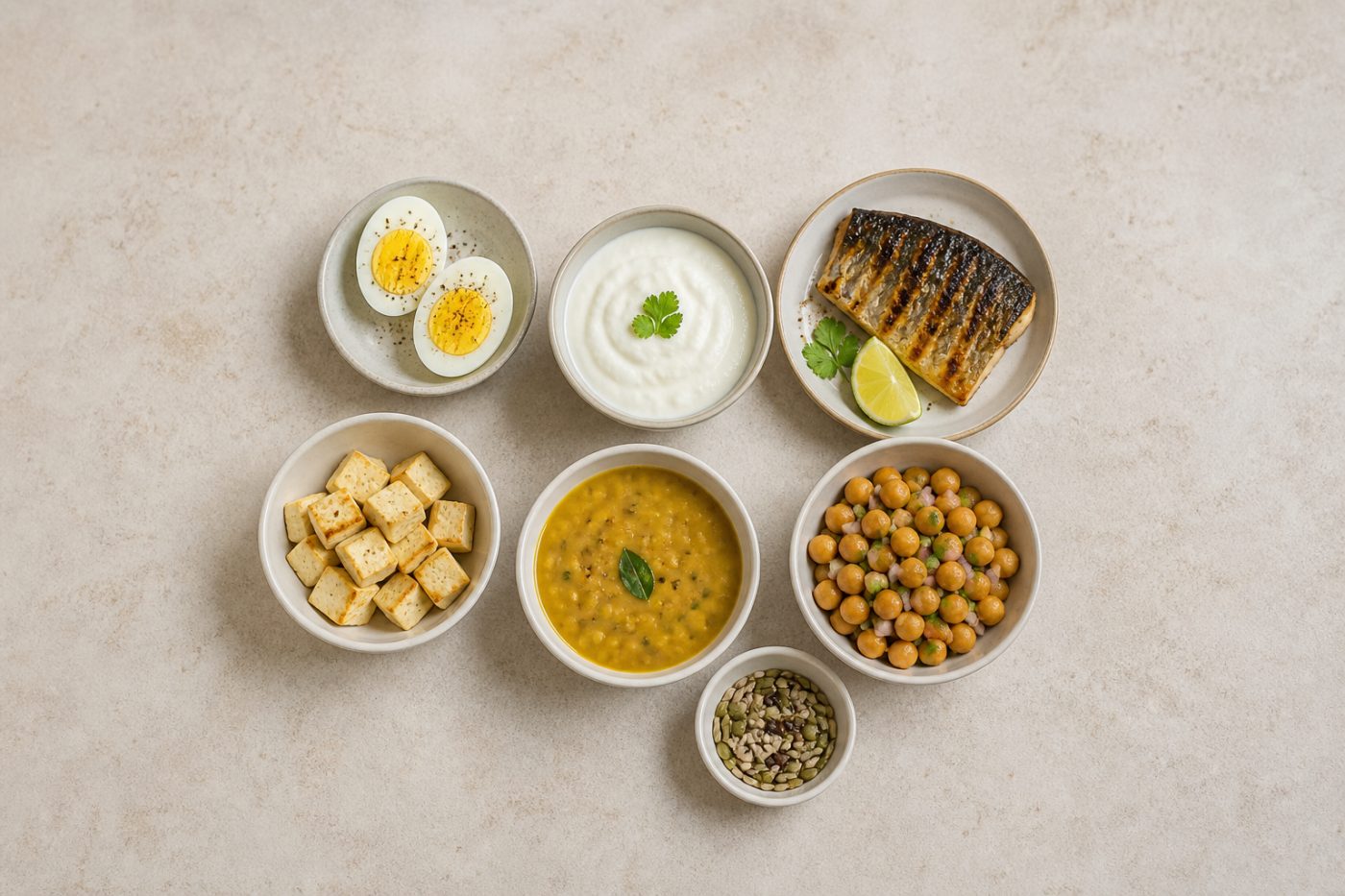
Spread useful portions across meals using dal, dairy, eggs, fish, chicken, soy or other foods that fit preference and health needs. Start small enough that technique and consistency are realistic. Change one or two variables at a time, keep the rest of the routine stable and review the pattern after several weeks rather than several days.
For an Indian routine, this can mean working with home food, work hours, travel, heat and family meals. It does not require a perfect schedule. A plan that survives busy weeks is usually more informative than an intense plan that stops after ten days.

What to track
Useful tracking depends on the goal. It may include symptoms, energy, sleep, waist, weekly weight trend, repetitions, walking pace, treatment photographs or laboratory results chosen by a clinician. Use the same method and similar conditions. Consumer devices are helpful for trends but are not diagnostic instruments.
More is not always better; appetite, kidney function, digestion and the quality of the overall plan matter. Avoid changing the plan because of one unusually good or bad reading. Look for a consistent direction and ask whether daily function, tolerance and quality of life are also improving.
Key takeaway: A trend that changes a decision is more useful than collecting every available number.
Where the evidence has limits
Research averages do not predict one person exactly. Small trials, short follow-up, different products, different laser settings or indirect outcomes can make a result look more certain than it is. This is especially important for supplements and longevity claims, where a change in a blood marker is not the same as preventing disease or extending life.
A cautious plan states what is known, what is still emerging and what would make us stop or change direction. It also avoids replacing proven care with a new product or procedure simply because the marketing sounds scientific.

When individual medical advice matters
Kidney disease, swallowing problems, unexplained weight loss or major dietary restriction need personalised advice. New or worsening symptoms should not be pushed through in the name of discipline. Pregnancy plans, chronic disease, prescription medicines, previous complications and major changes in exercise or diet can alter what is safe.
At The Derm Edit in Anna Nagar West Extension and Mogappair, Dr. Sarat Anandh, MD DVL, is a Medical Council registered dermatologist. For weight-management, longevity, skin or laser questions, an assessment can help define the goal, identify limits and decide what monitoring is useful. Message us on WhatsApp for details.
Questions we are asked
Is protein after 40 suitable for everyone?
No. Starting health, medicines, pregnancy plans, symptoms and the exact goal matter. Kidney disease, swallowing problems, unexplained weight loss or major dietary restriction need personalised advice.
How soon should I judge whether the plan is helping?
Use a pre-agreed review point measured in weeks or treatment cycles, not one day. The right interval depends on the intervention and the marker being tracked.
Can a wearable, supplement label or machine name make the decision for me?
No. More is not always better; appetite, kidney function, digestion and the quality of the overall plan matter. These tools add information but do not replace diagnosis, technique or clinical judgement.
What should I record before a consultation?
Bring your goals, medicines and supplements, relevant reports, symptoms, previous reactions and a simple record of food, activity, sleep or photographs that match the concern.
How do I choose a clinic in Chennai for protein after 40?
Choose a clinic that explains the diagnosis, evidence, alternatives, risks, monitoring and who performs the care. A responsible consultation does not promise the same outcome for everyone.
Sources & further reading
- Tan Z et al. — Resistance-training prescription for sarcopenia: systematic review and meta-analysis, 2026, https://pubmed.ncbi.nlm.nih.gov/41566419/
- Sun X et al. — Exercise for sarcopenia: systematic review and network meta-analysis, 2023, https://pubmed.ncbi.nlm.nih.gov/37057640/
- Whaikid P, Piaseu N — Protein plus resistance exercise in older adults with sarcopenia, 2024, https://pubmed.ncbi.nlm.nih.gov/38374703/
- World Health Organization — Guidelines on physical activity and sedentary behaviour, 2020, https://www.who.int/publications/i/item/9789240015128